Earlier this year I appeared on Michigan Radio’s “Three Things” series, in which people offer three ideas to help our state in this time of crisis. Here is a rough approximation of what I said: my “Three Things We Can Do to Help Michigan” (or any other place, for that matter…)
You can hear the broadcast here
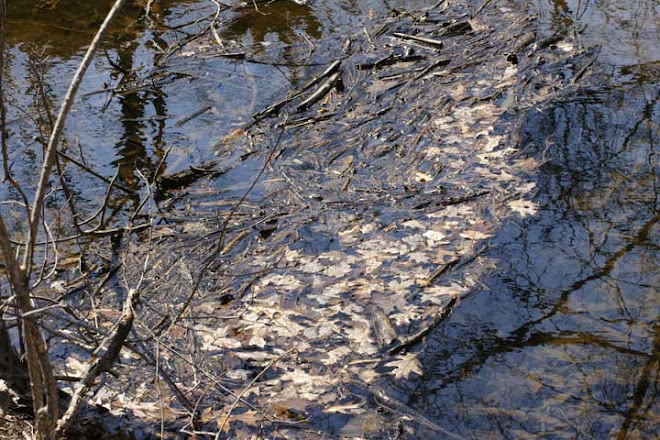
1. Michigan is defined by its waters, so one thing we can do is find out where our drinking water comes from and go visit it. Every single one of us lives in a watershed, so go find the headwaters of your nearest river, go Kayaking or canoeing, go for a walk along a nearby stream—if you do you’re sure to fall in love with it, and if we love the water we won’t want to pollute it.
When we come to understand that our lives are utterly dependent on the waters, we can begin to see that the rivers and streams are everywhere—not just between the banks and shorelines, but in the gutters and sewers under the street, in our sinks, and literally flowing through our veins. We can each immediately improve the heath of our waters by limiting our use of home toxics and not using fertilizers—if you live in an apartment complex or condominium talk to the management about cancelling the pesticide and fertilizer applications.
2. Keep art local: I’m a musician, so I often think about local art the way many people are starting to think about local food—it should be as fresh and locally grown as possible. We want our art it to taste like our own soil. One of the really great things about our state is the incredible number of local arts organizations that we have—for example there are so many regional orchestras in Michigan—this is something quite unusual about our state that we have to find a way to maintain. We can participate as performers, audience members, donors--Think about going to a live concert or play instead of renting a video, or join your local civic band. We all have the opportunity not only support local art, but also to make it ourselves. If we are all working together to build community organizations at the same time we are striving to make beauty out of everything around us, that cannot fail to improve our lives.
3. In these tough times you’ll hear politicians talking a lot about making Michigan competitive again, but I believe one of the most important things we can do is to think ourselves to a new metaphor that we can use to understand our relationship to each other. Maybe we could replace the idea of competition with collaboration. When we compete, someone always loses, someone is always suffering, even if we win. The truth is, we competed ourselves into this recession; we might have to do something else to get out. Competition is the game that led us to this catastrophe, so setting our determination to play the same game only harder is a nonsensical response. Competition tempts us to engage in a kind of ruthless self-interest that denies our responsibilities to each other.
If we can focus on stewardship of the natural beauties that surround us, and look to the arts as a model for how to cooperate to make meaning in our own communities and out of the stuff of our own lives, we might look around and see friends and neighbors instead of winners and losers. We might come to see the project of participating in the life of our state as a creative and cooperative one.
Tuesday, September 21, 2010


Monday, July 19, 2010
Eat Your Trash
When we die and are herded into purgatory to work off the sins of this life, we will first be required to eat all of the non-biodegradable trash we have generated in our lives: all the Styrofoam ™ cups, plastic bags and packaging, all the batteries and televisions, all the car parts, refrigerators, computers and printers and phones, electronic gadgets of all kinds.
They won’t be easy to swallow, but to wash it all down, we will have the sum total of the gallons of jet fuel, gasoline, and toxic chemicals we’ve been responsible for using. Then, when we are done re-generating with our own muscles every kilowatt of energy we thoughtlessly spent by plugging into our wall-sockets or flipping our light switches, we’ll still have to re-grow all the trees we chewed into oblivion with pulp fiction, useless reports, non-diary desserts, shopping lists, tissues, and toilet paper.
With the gnashing of our teeth we will grind to dust all the concrete from our roads and our runways, parking garages and shopping malls; we will die and decay over and over until our wasting bodies create enough earth to fill our hollow mine pits, and replace the soil eroded from our factory farms. After the mountaintops we’ve blown to bits for their coal have been rebuilt with our bones, be prepared to hold your breath until the carbon dioxide you emitted from tailpipe or furnace has been offset. For the grand finale, we’ll be asked to melt back to ore with the heat of our contrition all the steel from our cities and ships and tanks and trains and bombs.
As to the radiation, well, there is just no punishment sufficient to atone for the radiation from our missiles, medical equipment, or our nuclear waste, but we will be forced to live out all of its half-lives in torture witnessing the deformities and death visited upon generations upon generations of our descendants and upon the creatures of this earth, while our own bodies shine black with cancer, twisted and burned as matter itself disintegrates and passes through us endlessly.
These are the torments of the hell-realm we’ve created.
But let’s go back to the beginning. When we arrive there in purgatory, stripped naked of our advantages, the bill for our extravagance come due, and with the horror of what lies before us slowly dawning in our clouded minds, we will begin to understand that all of those scruffy “backward” people in the world we’ve been looking down on for living in dirt and in poverty will suddenly be far ahead of us in achieving release from the weight of their human incarnations. We’ll finally see the truth of our privileged American lives: that all of our unjust comforts and technological diversions are in fact the most insurmountable barriers between us and our entry into union with the divine. This is what Jesus meant when he said that the poor were closer to the kingdom of heaven.
“Blessed are you who are poor, for the reign of God is yours…But woe to you who are rich, for you have received your consolation.” (Luke 6:20)
They won’t be easy to swallow, but to wash it all down, we will have the sum total of the gallons of jet fuel, gasoline, and toxic chemicals we’ve been responsible for using. Then, when we are done re-generating with our own muscles every kilowatt of energy we thoughtlessly spent by plugging into our wall-sockets or flipping our light switches, we’ll still have to re-grow all the trees we chewed into oblivion with pulp fiction, useless reports, non-diary desserts, shopping lists, tissues, and toilet paper.
With the gnashing of our teeth we will grind to dust all the concrete from our roads and our runways, parking garages and shopping malls; we will die and decay over and over until our wasting bodies create enough earth to fill our hollow mine pits, and replace the soil eroded from our factory farms. After the mountaintops we’ve blown to bits for their coal have been rebuilt with our bones, be prepared to hold your breath until the carbon dioxide you emitted from tailpipe or furnace has been offset. For the grand finale, we’ll be asked to melt back to ore with the heat of our contrition all the steel from our cities and ships and tanks and trains and bombs.
As to the radiation, well, there is just no punishment sufficient to atone for the radiation from our missiles, medical equipment, or our nuclear waste, but we will be forced to live out all of its half-lives in torture witnessing the deformities and death visited upon generations upon generations of our descendants and upon the creatures of this earth, while our own bodies shine black with cancer, twisted and burned as matter itself disintegrates and passes through us endlessly.
These are the torments of the hell-realm we’ve created.
But let’s go back to the beginning. When we arrive there in purgatory, stripped naked of our advantages, the bill for our extravagance come due, and with the horror of what lies before us slowly dawning in our clouded minds, we will begin to understand that all of those scruffy “backward” people in the world we’ve been looking down on for living in dirt and in poverty will suddenly be far ahead of us in achieving release from the weight of their human incarnations. We’ll finally see the truth of our privileged American lives: that all of our unjust comforts and technological diversions are in fact the most insurmountable barriers between us and our entry into union with the divine. This is what Jesus meant when he said that the poor were closer to the kingdom of heaven.
“Blessed are you who are poor, for the reign of God is yours…But woe to you who are rich, for you have received your consolation.” (Luke 6:20)
Wednesday, July 14, 2010

Monday, July 12, 2010
The Wages of Sin

"The Wages of Sin is Death"
I have been baffled by this pronouncement for many years. Because I was raised without the benefit of religion, my beloved high-school orchestra teacher would quote it to rib me for being godless: "The wages of sin..." he'd say, pausing to leer significantly at me, "is Death." To my young moral-relativist and decidedly un-Christian mind, the nature of sin remained very much an open question at that time. And since Death is inevitable, wouldn't the wages of sin properly be eternal damnation, and not the demise we all have coming to us anyway?
Well, the oil spill in the Gulf of Mexico has finally clarified this issue for me in a way that thirty years of occasional meditation on the mystery and a succession of Christian girlfriends had not. I now believe the continuing environmental disaster that constitutes our way of life is what the statement refers to: "The wages of sin is Death."
All possible damning adjectives have been used to describe our arrogant, childish, and careless waste, but what else can we call our plunder of the earth without regard for consequence but sin? When we ceaselessly grab for profit to fuel our ease and our unjust comforts, engaging in a blanket disregard for the fragility and interconnectedness of the biological system that we inhabit, Death is born of our actions and from our hand.
Death for the marshes of Louisiana, and death for the Niger delta in Africa. Death for all the turtles and whales and fish and plants that live there, as well as for the humans, and a larger and unfathomable death for the subtle balance that keeps us alive as well. Death is spewing like a vast pall from the depths of the oceans and breached pipelines.
The small harm we can do to our bodies and our relationships with the seven deadly sins are paltry compared to the progeny that issue from the adulterous mating of technology with our desire. We have seen those seven deadly sins perfected, super-sized, and turbocharged by technology and capitalism, unleashing monsters the size of which no one ever dreamed: the pthalates in our plastic, phosphates and plutonium. When we dominate and try to steal Nature’s power instead of living in accordance with it, when we plug our sins into the power grid, thus do we multiply their breadth, and thus do we magnify the spreading slick of Death that is born of them.
The real deadly sins surround us, in our cars and coal plants and air-conditioning, in our mining and manufacture and our monocultures. There is Death in the child's toy, in the grocery bag, and death in this airplane inside of which I currently sit and write: death issues from its metals and its fuel, from the can of Coke and the plastic cup, as well as the seat-back and tray-table that bear them. There is sin in the Doritos, in the tarmac, and the cell phone, and it is giving birth to death all around us whether we see it or not. In our lust for power, we rape the earth, killing our souls and ourselves and everything else.
“Each person is tempted when he is lured and enticed by his own desire. Then desire conceives and brings forth sin, and when sin reaches maturity, if gives birth to death.” (James 1:13)
Our sins and their wages flow through the oceans and rivers, as well as our mother’s milk and our bloodstream—they glisten in every cell of the frogs and fish and freshwater mussels. We are sowing them like the true seeds of our passage on this earth.
Tuesday, June 8, 2010
Wisdom of the Day
"Where is the literature which gives expression to Nature? He would be a poet who could impress the winds and streams into his service to speak for him; who nailed words to their primitive senses, as farmers drive down stakes in the spring, which the frost has heaved; who derived his words as often as he used them—transplanted them to his page with earth adhering to their roots; whose words were so true and fresh and natural that they would appear to expand like the buds at the approach of spring, though they lay half-smothered between two musty leaves in a library—aye, to bloom and bear fruit there, after their kind, annually, for the faithful reader, in sympathy with surrounding nature.
I do not know of any poetry to quote which adequately expresses this yearning for the wild...In short, all good things are wild and free. There is something in a strain of music, whether produced by an instrument or by the human voice—take the sound of a bugle in a summer night, for instance—which by its wildness, to speak without satire, reminds me of the cries emitted by wild beasts in their native forests. It is so much of their wildness as I can understand. Give me for my friends and neighbors wild men, not tame ones."
Henry David Thoreau Walking
I do not know of any poetry to quote which adequately expresses this yearning for the wild...In short, all good things are wild and free. There is something in a strain of music, whether produced by an instrument or by the human voice—take the sound of a bugle in a summer night, for instance—which by its wildness, to speak without satire, reminds me of the cries emitted by wild beasts in their native forests. It is so much of their wildness as I can understand. Give me for my friends and neighbors wild men, not tame ones."
Henry David Thoreau Walking
Monday, May 17, 2010
Graveyard Meditation

Elizabeth O
dau of
Samuel and Mary E.
Emory Died
Feb 13 1845
ae 4 yrs
farewell thou lovely little girl
gone to the realm above
where shines the everlasting sun
and all is peace and love.
We would not call thee back again
from thy fair spirit land
but flowers thy early grave shall declaim
shown by a sister's hand

dau of
Samuel and Mary E.
Emory Died
Feb 13 1845
ae 4 yrs
farewell thou lovely little girl
gone to the realm above
where shines the everlasting sun
and all is peace and love.
We would not call thee back again
from thy fair spirit land
but flowers thy early grave shall declaim
shown by a sister's hand

Friday, May 14, 2010
Hourglass Admonition

My Glass is run & so must yours
Erected in Memory of
Mrs. Ian Harper (wife
of Mr. Andrew Harper)
who departed this life
Nov.r ye 29th 1777
in the 65th year of her age
Death like an overflowing Flood
Doth sweep us all away
The young, the old, the middle Aged
to death becomes a pray

*************
I believe that the last word should actually be "prey," though the misspelling brings about an interesting shift in meaning.
Erected in Memory of
Mrs. Ian Harper (wife
of Mr. Andrew Harper)
who departed this life
Nov.r ye 29th 1777
in the 65th year of her age
Death like an overflowing Flood
Doth sweep us all away
The young, the old, the middle Aged
to death becomes a pray

*************
I believe that the last word should actually be "prey," though the misspelling brings about an interesting shift in meaning.

Wednesday, May 12, 2010
Tombstone of the Day

I recently returned to the Old Burying Ground in Jaffrey NH; this is the cemetery that my song cycle The Old Burying Ground is based on. I was once again very moved by the messages about life that are carved into the stones there.
The compact disk of the orchestra version of the piece is due out in June, and I'll be sharing a tombstone every couple of days or so until then.
*************
Memento mori
HERE lies the Bodys of Two
Children both Named John
Sons of Mr John and Mrs
Allice Gilmore
The compact disk of the orchestra version of the piece is due out in June, and I'll be sharing a tombstone every couple of days or so until then.
*************
Memento mori
HERE lies the Bodys of Two
Children both Named John
Sons of Mr John and Mrs
Allice Gilmore
The Second | The first Born
Born son died | Died Oct ye12th
Feb 24th 1781 | 1778 Aged 6
Aged 21 weeks | years wanting
and 3 days | 6 days
Who lived desired and died lamentedBorn son died | Died Oct ye12th
Feb 24th 1781 | 1778 Aged 6
Aged 21 weeks | years wanting
and 3 days | 6 days
Friday, May 7, 2010
What we do not want
“I don’t want to bleed now.”
I heard a little girl say these words as we waited to get off of the big boat from Dublin to Swansea, in 1992, after a sleepless overnight trip across the Irish sea at the end of a long trip through Scotland and Ireland. Suzanne and I were still young, newly married, and traveling on the cheap, so the boat-and-bus route back to London for the flight home seemed reasonable. But we were exhausted and getting over a flu we had come down with in Belfast, and more than ready to blink ourselves home if we could've. We had absolutely had it.
The whole process of boarding the ship was confusing and overwhelming and chaotic—after finding the right docks, then waiting and waiting for hours and worrying and wondering where to be and what to do, we were finally crammed onto the last shuttle bus that would take us to the ship. A little boy strapped into a folding stroller was so far gone by that point that he cried and cried until he threw up at our feet. There was nothing to do for him, and everyone just looked at each other. I think we all felt like he did.
The sun was down by the time we went up the gangway, and after an almost romantic slow-motion silhouette of Dublin disappearing, a vision of the mouth of the Liffey fading over the stern, with the ship’s wake glowing faintly in the last light, we resigned ourselves to our long night of wanderings, looking for some place of quiet, for some relief from noise and cigarette smoke and the constant blast of the engines.
There was a session in the pub space on the ferry, but we weren’t good enough players to participate. I remember a piper ripping away at tunes so fast and impenetrable that it made me feel bleak inside–I couldn't even imagine keeping up with him at some possible future time, after years of practice. It was music that didn't even seem to have room for a listener in it.
Every nerve I had was raw. Nauseous and anxious, every system on overload, it was a constant battle to keep trying to calm myself and sleep. Rattled and buzzing, at once numb and agitated, I would momentarily succumb to fatigue and drift into semi-consciousness, only to be shocked awake by some sound, a roll of the ship, an inner upwelling, or the weird sparking of my frazzled brain.
When we finally approached land, everyone rushed to grab luggage, then crowded into the exit corridor, standing uselessly prepared to disembark for the longest time. A little girl got her finger stepped on or smashed between suitcases in the crush, and blood was gushing from what should have been a small wound. They held her hand over her head for her—she was too big to pick up, perhaps six years old.
Things got really quiet all of a sudden. She said “But I don’t want to bleed now” so simply. It became clear that bleeding was a familiar but unwelcome activity for her, that she must have been a Hemophiliac, and that this small mishap could become a grave problem. I offered them my pathetic wad of napkins and tissues from my pocket, a cache I’d been saving to protect myself from…from who knows what? From some kind of need.
We all waited while she bled, and no one talked. There was nowhere to go. Someone else offered clean handkerchiefs, and my chest constricted and my skin became hot with the weight of emotion for this family who were quietly waiting with us, matter-of-factly helpless till we reached the shore.
I wanted to cry for them, for the simple hopelessness of it all, for the beautiful little hurt girl and her illness that would eventually kill her and the death to come that was suddenly made manifest for us there in all that mess of humanity. She and her parents were brave and still, but I imagined the weight they carried for so long with no relief from the demands and the worry. I could feel her brother’s burning guilt and resentment at not being the one who was sick.
Most of all I think I felt the ache of seeing a hurt that could not be held—there was no one to hold this suffering family and to care for that pain in any way that would help. We were all just there to witness their plain human drama of incurable illness and ordinary but life-threatening mishap juxtaposed with a child’s heart-breaking wish for things not to be so.
I think they were probably spared disaster in that moment, in retrospect—I believe I saw them heading for some trailer in the darkness once we landed. Presumably there was first aid there for them while the rest of us all resumed our self-interested ways and scrambled to find the right bus to London, and they got left behind on the forlorn coast in the middle of the night.
But it makes me cry now, too, remembering, for that innocent little girl, and all the poor sad hurt children who are too big to be carried, and for all of us with sorrows that we did not choose and cannot change. There is no love that can really hold our pain, and all of us, all the poor children who are beyond help, all are alone with our suffering, though we might wish it were otherwise.
I heard a little girl say these words as we waited to get off of the big boat from Dublin to Swansea, in 1992, after a sleepless overnight trip across the Irish sea at the end of a long trip through Scotland and Ireland. Suzanne and I were still young, newly married, and traveling on the cheap, so the boat-and-bus route back to London for the flight home seemed reasonable. But we were exhausted and getting over a flu we had come down with in Belfast, and more than ready to blink ourselves home if we could've. We had absolutely had it.
The whole process of boarding the ship was confusing and overwhelming and chaotic—after finding the right docks, then waiting and waiting for hours and worrying and wondering where to be and what to do, we were finally crammed onto the last shuttle bus that would take us to the ship. A little boy strapped into a folding stroller was so far gone by that point that he cried and cried until he threw up at our feet. There was nothing to do for him, and everyone just looked at each other. I think we all felt like he did.
The sun was down by the time we went up the gangway, and after an almost romantic slow-motion silhouette of Dublin disappearing, a vision of the mouth of the Liffey fading over the stern, with the ship’s wake glowing faintly in the last light, we resigned ourselves to our long night of wanderings, looking for some place of quiet, for some relief from noise and cigarette smoke and the constant blast of the engines.
There was a session in the pub space on the ferry, but we weren’t good enough players to participate. I remember a piper ripping away at tunes so fast and impenetrable that it made me feel bleak inside–I couldn't even imagine keeping up with him at some possible future time, after years of practice. It was music that didn't even seem to have room for a listener in it.
Every nerve I had was raw. Nauseous and anxious, every system on overload, it was a constant battle to keep trying to calm myself and sleep. Rattled and buzzing, at once numb and agitated, I would momentarily succumb to fatigue and drift into semi-consciousness, only to be shocked awake by some sound, a roll of the ship, an inner upwelling, or the weird sparking of my frazzled brain.
When we finally approached land, everyone rushed to grab luggage, then crowded into the exit corridor, standing uselessly prepared to disembark for the longest time. A little girl got her finger stepped on or smashed between suitcases in the crush, and blood was gushing from what should have been a small wound. They held her hand over her head for her—she was too big to pick up, perhaps six years old.
Things got really quiet all of a sudden. She said “But I don’t want to bleed now” so simply. It became clear that bleeding was a familiar but unwelcome activity for her, that she must have been a Hemophiliac, and that this small mishap could become a grave problem. I offered them my pathetic wad of napkins and tissues from my pocket, a cache I’d been saving to protect myself from…from who knows what? From some kind of need.
We all waited while she bled, and no one talked. There was nowhere to go. Someone else offered clean handkerchiefs, and my chest constricted and my skin became hot with the weight of emotion for this family who were quietly waiting with us, matter-of-factly helpless till we reached the shore.
I wanted to cry for them, for the simple hopelessness of it all, for the beautiful little hurt girl and her illness that would eventually kill her and the death to come that was suddenly made manifest for us there in all that mess of humanity. She and her parents were brave and still, but I imagined the weight they carried for so long with no relief from the demands and the worry. I could feel her brother’s burning guilt and resentment at not being the one who was sick.
Most of all I think I felt the ache of seeing a hurt that could not be held—there was no one to hold this suffering family and to care for that pain in any way that would help. We were all just there to witness their plain human drama of incurable illness and ordinary but life-threatening mishap juxtaposed with a child’s heart-breaking wish for things not to be so.
I think they were probably spared disaster in that moment, in retrospect—I believe I saw them heading for some trailer in the darkness once we landed. Presumably there was first aid there for them while the rest of us all resumed our self-interested ways and scrambled to find the right bus to London, and they got left behind on the forlorn coast in the middle of the night.
But it makes me cry now, too, remembering, for that innocent little girl, and all the poor sad hurt children who are too big to be carried, and for all of us with sorrows that we did not choose and cannot change. There is no love that can really hold our pain, and all of us, all the poor children who are beyond help, all are alone with our suffering, though we might wish it were otherwise.
Tuesday, May 4, 2010
A text message from 1845
May 4, 2010
In the Old Burying Ground,
Jaffrey Center New Hampshire;
Among the wild strawberries (blooming),
and the blackflies (biting),
A text message from 1845:
In the Old Burying Ground,
Jaffrey Center New Hampshire;
Among the wild strawberries (blooming),
and the blackflies (biting),
A text message from 1845:
RUTH ANN
wife of
Joseph Cutter Mass
DIED
Aug 8 1845
AE 21
How vain is all beneath the skies
How transient every earthly bliss
How slender all the fondest ties
That bind us to a world like this

wife of
Joseph Cutter Mass
DIED
Aug 8 1845
AE 21
How vain is all beneath the skies
How transient every earthly bliss
How slender all the fondest ties
That bind us to a world like this

Friday, April 16, 2010
Wisdom of the Day
A fool is happy
Until her mischief turns against her.
And a good woman may suffer
Until her goodness flowers.
The Dhammapada
Until her mischief turns against her.
And a good woman may suffer
Until her goodness flowers.
The Dhammapada
Thursday, February 18, 2010
wisdom of the day
Ego thinks it is much more powerful than it actually is. In this way it defends itself against the realization of its true condition...which is fucked.
Robert Hall
quoted in A Hell of Mercy, Tim Farrington
Robert Hall
quoted in A Hell of Mercy, Tim Farrington
Sunday, February 14, 2010
Diamonds, gold, roses and chocolate
It's a long way from a Roman fertility rite turned feast day for the martyrdom of a defiant priest to the holiday of Valentine's Day as we now celebrate it, with the required expenditure of 14 billion dollars to prove our love to our demanding partners.
So many lands and so many souls have been enslaved to our desire for diamonds, gold, roses, and chocolate...Do we need to show our love through such violence?
Let's spend next year's 14 billion on commodities less destructive to our planet and our social structures, like shelter for homeless people and environmental clean-ups, with some of the dollars set aside to convert our hydocarbon economy to solar, wind, water and human power.
If we really do truly love each other, that would be a better way to spend our money...it might not get us laid, but then maybe we could change our courting rituals. If that sounds far-fetched, remember that our noble ancestors the Romans believed that striking women with strips of bloody goat hide was an effective prelude to sucessful mating, so perhaps the idea of inclding ritual offerings in our professions of love that would care for our fellow humans and the planet isn't so crazy after all.
So many lands and so many souls have been enslaved to our desire for diamonds, gold, roses, and chocolate...Do we need to show our love through such violence?
Let's spend next year's 14 billion on commodities less destructive to our planet and our social structures, like shelter for homeless people and environmental clean-ups, with some of the dollars set aside to convert our hydocarbon economy to solar, wind, water and human power.
If we really do truly love each other, that would be a better way to spend our money...it might not get us laid, but then maybe we could change our courting rituals. If that sounds far-fetched, remember that our noble ancestors the Romans believed that striking women with strips of bloody goat hide was an effective prelude to sucessful mating, so perhaps the idea of inclding ritual offerings in our professions of love that would care for our fellow humans and the planet isn't so crazy after all.
Thursday, February 11, 2010
Monday, February 1, 2010
wisdom of the day
We don't have to engage in grand, heroic actions to participate
in the process of change. Small acts, when multiplied
by millions of people, can transform the world.
~Howard Zinn
(Please read "The People's History of the United States" as soon as possible; it will break your heart and make you want to save our country.)
in the process of change. Small acts, when multiplied
by millions of people, can transform the world.
~Howard Zinn
(Please read "The People's History of the United States" as soon as possible; it will break your heart and make you want to save our country.)
Thursday, January 28, 2010
What Are Orchestras Going to Do?
And the answer is....retrenchment. At least the big organizations. After the University of Michigan orchestra summit, it sounded to me like the large urban orchestras are retreating to "core audience" values, which is another way of saying that they are responding to the fiscal crisis by reverting to the most conservative repertoire, 19th century and European music. "Special projects" such as partnerships with civic arts initiatives and commissions are out of the question for them in light of huge deficits.
The word from the medium and smaller orchestras was that they are making moves to become relevant to their communities as a nexus for K-12 music education, private lessons, and "community enrichment" activities.
The word from the medium and smaller orchestras was that they are making moves to become relevant to their communities as a nexus for K-12 music education, private lessons, and "community enrichment" activities.
Tuesday, January 26, 2010
The music is not the notes...
The music is not the notes. The lattice-work of dots is only a set of instructions for creating the music, which itself carries the fluid substrate of feeling intention and gestural energy instilled by the composer and performers.
We composers work by being truly open to experience (cultural, personal, physical, emotional, spiritual) and reflecting upon it, then distilling that field of experience, thought and feeling into understanding, and finally translating all of it back into an experience for the musicians and the audience through music.
We work by drawing music into what we think, into our worldview, into our understanding and our personal wisdom experience, and letting it steep there, not by pushing what we think and feel out into sound.
The true material we composers work with is all that knowledge, sensation, and feeling–not the notes. The notes merely carry the music, and the music carries this distilled understanding-life-energy-experience as communication...as living, immediate and urgent action.
We composers work by being truly open to experience (cultural, personal, physical, emotional, spiritual) and reflecting upon it, then distilling that field of experience, thought and feeling into understanding, and finally translating all of it back into an experience for the musicians and the audience through music.
We work by drawing music into what we think, into our worldview, into our understanding and our personal wisdom experience, and letting it steep there, not by pushing what we think and feel out into sound.
The true material we composers work with is all that knowledge, sensation, and feeling–not the notes. The notes merely carry the music, and the music carries this distilled understanding-life-energy-experience as communication...as living, immediate and urgent action.
Saturday, January 23, 2010
Bad News and Killer Carp
Bad news loves bad news. This week, the earthquake deaths in Hati mount, and confronting the breadth of human suffering brings us face to face with a misery we know we deserve as much as anyone else. Democrats lose their supermajority in the senate to a nude centerfold with a fancy pickup truck, and are ready to throw in the towel and stop trying to do what is right. The supreme court guts campaign finance reform, making the world safe for corporations to fully express themselves by purchasing our government.
But 100 pound fish are invading Lake Michigan? And we're not allowed to close off the canal that is their entryway? This is a joke, right?
The supreme court has refused to issue an preliminary injunction to close the canal that is allowing the asian carp into the great lakes from Chicago's waterways. The Obama adminstration is also against closing the canal, as it would presumably be "bad for business." Bad for the shipping business in Chicago, that is. But if it stays open it will be bad for the living business in Michigan and Wisconsin, but I guess they are throw-away states at this point.
The carp eat up to 1/5 of their body weight in plankton each day, and kill off all other fish species by eating all the food. The carp grow to up to 110 pounds, and are attracted to swimmers and small boats, often leaping onto them, causing serious injury. So if they invade the great lakes, there will be no commercial fishery there, no sport fishery, and tourism will go to hell. The state of Illinois has responded to Michigan's court cases by dumping unprecedented amounts of poison into the canal in the hope of killing all the fish species in the waterway. Of course those dead fish are eaten by birds, and passed up the food chain, and the poisoned water itself is flowing into Lake Michigan, but no matter...
But 100 pound fish are invading Lake Michigan? And we're not allowed to close off the canal that is their entryway? This is a joke, right?
The supreme court has refused to issue an preliminary injunction to close the canal that is allowing the asian carp into the great lakes from Chicago's waterways. The Obama adminstration is also against closing the canal, as it would presumably be "bad for business." Bad for the shipping business in Chicago, that is. But if it stays open it will be bad for the living business in Michigan and Wisconsin, but I guess they are throw-away states at this point.
The carp eat up to 1/5 of their body weight in plankton each day, and kill off all other fish species by eating all the food. The carp grow to up to 110 pounds, and are attracted to swimmers and small boats, often leaping onto them, causing serious injury. So if they invade the great lakes, there will be no commercial fishery there, no sport fishery, and tourism will go to hell. The state of Illinois has responded to Michigan's court cases by dumping unprecedented amounts of poison into the canal in the hope of killing all the fish species in the waterway. Of course those dead fish are eaten by birds, and passed up the food chain, and the poisoned water itself is flowing into Lake Michigan, but no matter...
Tuesday, January 19, 2010
Free the Huron River
If there were any kind of newspaper left in this city, the following would be an opinion piece or a long letter to the editor...
A very vocal group of citizens in my town (many of them my near and much-respected neighbors) has become very vocal in their support of leaving the aging Argo dam in place. This dam is at the end of my street, so it hits pretty close to home for me, as I kayak the waters behind the dam a few times every week when the pond isn't frozen. The state of Michigan says the city has to remove or repair it, and and the local watershed council has strongly recommended removal. My neighbors have framed their position on this issue with yard signs that say "Save Argo Pond."
By doing so they directly reference many other similar campaigns we have become familiar with: "save the whales", "save the Hudson", "save orchestra hall"...in each of these cases, though, there is a natural feature or a historic building or a community asset that is perceived to be threatened by destructive forces that are in the wrong, and there is a call for us to step up into individual responsibility to protect something that should not be destroyed. In this case however, there is a reversal I find ironic--the "save the" argument is being used in the service of the preservation of an aging dam that is proven to be bad for the health of the river, and at great expense to the city.
The city council is not meant only to make decisions based on the desires of narrowly defined economic elite, nor even on the basis of their perception of what the majority of their constituents want. Still less are they [you] meant to develop that perception based on who seems to be shouting the loudest, though it seems that that is often the most politically expedient thing to do. You [they] are also meant to serve as stewards for the all the lands of the city, the whole environment that those lands entail, the same environment that supports our human lives, and countless others.
If a group of people got signs printed saying "more toxic waste dumping," even if they seemed to be in the majority, even if they included the past president of the Downtown Development Authority or the chamber of commerce, it would be incumbent upon you [us] to say "no, that is not in the best interest of the whole community, and not in the best interest of the environment that supports our community."
In this way, the Huron river itself is like one of your constituents, or rather, like one of your charges--something that needs to be cared for and preserved as an essential part of our lives (it literally flows through the veins of everyone in this town)--but it can't speak for itself. Though I'm all in favor of recreation and cardiovascular health, I don't think the rowing team's reluctance to relocate, or the desire to keep Barton pond clear of rowing shells for the rich folks is enough reason to insist on going to great city expense to keep the river sick.
The Huron river is sick. It is sick because of what we have done to it. We cannot expect to keep making the environment upon which we depend for our existence sick, and somehow expect to be well ourselves. I urge you [everyone] to act as stewards, and to do what you know is right, even if it is hard: we must free the Huron river.
A very vocal group of citizens in my town (many of them my near and much-respected neighbors) has become very vocal in their support of leaving the aging Argo dam in place. This dam is at the end of my street, so it hits pretty close to home for me, as I kayak the waters behind the dam a few times every week when the pond isn't frozen. The state of Michigan says the city has to remove or repair it, and and the local watershed council has strongly recommended removal. My neighbors have framed their position on this issue with yard signs that say "Save Argo Pond."
By doing so they directly reference many other similar campaigns we have become familiar with: "save the whales", "save the Hudson", "save orchestra hall"...in each of these cases, though, there is a natural feature or a historic building or a community asset that is perceived to be threatened by destructive forces that are in the wrong, and there is a call for us to step up into individual responsibility to protect something that should not be destroyed. In this case however, there is a reversal I find ironic--the "save the" argument is being used in the service of the preservation of an aging dam that is proven to be bad for the health of the river, and at great expense to the city.
The city council is not meant only to make decisions based on the desires of narrowly defined economic elite, nor even on the basis of their perception of what the majority of their constituents want. Still less are they [you] meant to develop that perception based on who seems to be shouting the loudest, though it seems that that is often the most politically expedient thing to do. You [they] are also meant to serve as stewards for the all the lands of the city, the whole environment that those lands entail, the same environment that supports our human lives, and countless others.
If a group of people got signs printed saying "more toxic waste dumping," even if they seemed to be in the majority, even if they included the past president of the Downtown Development Authority or the chamber of commerce, it would be incumbent upon you [us] to say "no, that is not in the best interest of the whole community, and not in the best interest of the environment that supports our community."
In this way, the Huron river itself is like one of your constituents, or rather, like one of your charges--something that needs to be cared for and preserved as an essential part of our lives (it literally flows through the veins of everyone in this town)--but it can't speak for itself. Though I'm all in favor of recreation and cardiovascular health, I don't think the rowing team's reluctance to relocate, or the desire to keep Barton pond clear of rowing shells for the rich folks is enough reason to insist on going to great city expense to keep the river sick.
The Huron river is sick. It is sick because of what we have done to it. We cannot expect to keep making the environment upon which we depend for our existence sick, and somehow expect to be well ourselves. I urge you [everyone] to act as stewards, and to do what you know is right, even if it is hard: we must free the Huron river.
Monday, January 18, 2010
Sound of Life
I was asked recently "What is the sound of life?" I noticed that the questioner did not say "human life."
One truth is that we live surrounded by countless non-human presences and the sounds of their beingness.
(please read The Spell of the Sensuous by David Abram.)
I've often wondered if bees can hear the sound of their own buzzing–the constant thrum and disturbance that accompanies their activity. It makes me wonder if we have our own buzzing noise imprint that accompanies our going and our doing in the same way–a disruption of the sonic world we might be too engaged in pollen-seeking to notice, to perceive. At least, there are the vast buzzing sounds of the technology we've extended ourselves into. But below that there are the patterns of energy in space that we make with our activities (doing email, rushing to appointments, driving). The flashes of electrical energy in our brains are also similar energy-traces, of course, and by acting on them and perceiving, we both create and are affected by their shapes and vibrations in the world. We make patterns of energy in space just by being–and of course, that is exactly what sounds are: patterns of energy in space.
If we can still ourselves, stop croaking our names like Emily Dickenson's famous frogs, and quiet our external buzzing, we can begin to attend to the many other kinds of non-human being-energy around us: the foxes in the woods over there, the deer and hawks and the milkweed–they all have their pattern of energy in space. Even each place along the earth has its own rate of vibration, resonance, and being-texture.
If we can still ourselves, and quiet our pollen-gathering buzz, we can become attuned to the sound of life and being of the natural world in our own place, that which we are part of. And one of the oldest human activities is to fill ourselves with the wonder of that experience, then open our mouths and hearts and bravely sing our own song.
One truth is that we live surrounded by countless non-human presences and the sounds of their beingness.
(please read The Spell of the Sensuous by David Abram.)
I've often wondered if bees can hear the sound of their own buzzing–the constant thrum and disturbance that accompanies their activity. It makes me wonder if we have our own buzzing noise imprint that accompanies our going and our doing in the same way–a disruption of the sonic world we might be too engaged in pollen-seeking to notice, to perceive. At least, there are the vast buzzing sounds of the technology we've extended ourselves into. But below that there are the patterns of energy in space that we make with our activities (doing email, rushing to appointments, driving). The flashes of electrical energy in our brains are also similar energy-traces, of course, and by acting on them and perceiving, we both create and are affected by their shapes and vibrations in the world. We make patterns of energy in space just by being–and of course, that is exactly what sounds are: patterns of energy in space.
If we can still ourselves, stop croaking our names like Emily Dickenson's famous frogs, and quiet our external buzzing, we can begin to attend to the many other kinds of non-human being-energy around us: the foxes in the woods over there, the deer and hawks and the milkweed–they all have their pattern of energy in space. Even each place along the earth has its own rate of vibration, resonance, and being-texture.
If we can still ourselves, and quiet our pollen-gathering buzz, we can become attuned to the sound of life and being of the natural world in our own place, that which we are part of. And one of the oldest human activities is to fill ourselves with the wonder of that experience, then open our mouths and hearts and bravely sing our own song.
Wisdom of the Day
Martin Luther King Jr.
Excerpts from Letter from the Birmingham City Jail
You may well ask: "Why direct action? Why sit ins, marches and so forth? Isn't negotiation a better path?" You are quite right in calling for negotiation. Indeed, this is the very purpose of direct action. Nonviolent direct action seeks to create such a crisis and foster such a tension that a community which has constantly refused to negotiate is forced to confront the issue. It seeks so to dramatize the issue that it can no longer be ignored. My citing the creation of tension as part of the work of the nonviolent resister may sound rather shocking. But I must confess that I am not afraid of the word "tension." I have earnestly opposed violent tension, but there is a type of constructive, nonviolent tension which is necessary for growth.
..........
How does one determine whether a law is just or unjust? A just law is a man made code that squares with the moral law or the law of God. An unjust law is a code that is out of harmony with the moral law. To put it in the terms of St. Thomas Aquinas: An unjust law is a human law that is not rooted in eternal law and natural law. Any law that uplifts human personality is just. Any law that degrades human personality is unjust.
............
We should never forget that everything Adolf Hitler did in Germany was "legal" and everything the Hungarian freedom fighters did in Hungary was "illegal." It was "illegal" to aid and comfort a Jew in Hitler's Germany. Even so, I am sure that, had I lived in Germany at the time, I would have aided and comforted my Jewish brothers. If today I lived in a Communist country where certain principles dear to the Christian faith are suppressed, I would openly advocate disobeying that country's antireligious laws.
..........
So I have not said to my people: "Get rid of your discontent." Rather, I have tried to say that this normal and healthy discontent can be channeled into the creative outlet of nonviolent direct action. And now this approach is being termed extremist. But though I was initially disappointed at being categorized as an extremist, as I continued to think about the matter I gradually gained a measure of satisfaction from the label. Was not Jesus an extremist for love: "Love your enemies, bless them that curse you, do good to them that hate you, and pray for them which despitefully use you, and persecute you." Was not Amos an extremist for justice: "Let justice roll down like waters and righteousness like an ever flowing stream." Was not Paul an extremist for the Christian gospel: "I bear in my body the marks of the Lord Jesus." Was not Martin Luther an extremist: "Here I stand; I cannot do otherwise, so help me God." And John Bunyan: "I will stay in jail to the end of my days before I make a butchery of my conscience." And Abraham Lincoln: "This nation cannot survive half slave and half free." And Thomas Jefferson: "We hold these truths to be self evident, that all men are created equal . . ." So the question is not whether we will be extremists, but what kind of extremists we will be. Will we be extremists for hate or for love? Will we be extremists for the preservation of injustice or for the extension of justice? In that dramatic scene on Calvary's hill three men were crucified. We must never forget that all three were crucified for the same crime--the crime of extremism. Two were extremists for immorality, and thus fell below their environment. The other, Jesus Christ, was an extremist for love, truth and goodness, and thereby rose above his environment. Perhaps the South, the nation and the world are in dire need of creative extremists.
...........
Over the past few years I have consistently preached that nonviolence demands that the means we use must be as pure as the ends we seek. I have tried to make clear that it is wrong to use immoral means to attain moral ends. But now I must affirm that it is just as wrong, or perhaps even more so, to use moral means to preserve immoral ends. Perhaps Mr. Connor and his policemen have been rather nonviolent in public, as was Chief Pritchett in Albany, Georgia, but they have used the moral means of nonviolence to maintain the immoral end of racial injustice. As T. S. Eliot has said: "The last temptation is the greatest treason: To do the right deed for the wrong reason."
Excerpts from Letter from the Birmingham City Jail
You may well ask: "Why direct action? Why sit ins, marches and so forth? Isn't negotiation a better path?" You are quite right in calling for negotiation. Indeed, this is the very purpose of direct action. Nonviolent direct action seeks to create such a crisis and foster such a tension that a community which has constantly refused to negotiate is forced to confront the issue. It seeks so to dramatize the issue that it can no longer be ignored. My citing the creation of tension as part of the work of the nonviolent resister may sound rather shocking. But I must confess that I am not afraid of the word "tension." I have earnestly opposed violent tension, but there is a type of constructive, nonviolent tension which is necessary for growth.
..........
How does one determine whether a law is just or unjust? A just law is a man made code that squares with the moral law or the law of God. An unjust law is a code that is out of harmony with the moral law. To put it in the terms of St. Thomas Aquinas: An unjust law is a human law that is not rooted in eternal law and natural law. Any law that uplifts human personality is just. Any law that degrades human personality is unjust.
............
We should never forget that everything Adolf Hitler did in Germany was "legal" and everything the Hungarian freedom fighters did in Hungary was "illegal." It was "illegal" to aid and comfort a Jew in Hitler's Germany. Even so, I am sure that, had I lived in Germany at the time, I would have aided and comforted my Jewish brothers. If today I lived in a Communist country where certain principles dear to the Christian faith are suppressed, I would openly advocate disobeying that country's antireligious laws.
..........
So I have not said to my people: "Get rid of your discontent." Rather, I have tried to say that this normal and healthy discontent can be channeled into the creative outlet of nonviolent direct action. And now this approach is being termed extremist. But though I was initially disappointed at being categorized as an extremist, as I continued to think about the matter I gradually gained a measure of satisfaction from the label. Was not Jesus an extremist for love: "Love your enemies, bless them that curse you, do good to them that hate you, and pray for them which despitefully use you, and persecute you." Was not Amos an extremist for justice: "Let justice roll down like waters and righteousness like an ever flowing stream." Was not Paul an extremist for the Christian gospel: "I bear in my body the marks of the Lord Jesus." Was not Martin Luther an extremist: "Here I stand; I cannot do otherwise, so help me God." And John Bunyan: "I will stay in jail to the end of my days before I make a butchery of my conscience." And Abraham Lincoln: "This nation cannot survive half slave and half free." And Thomas Jefferson: "We hold these truths to be self evident, that all men are created equal . . ." So the question is not whether we will be extremists, but what kind of extremists we will be. Will we be extremists for hate or for love? Will we be extremists for the preservation of injustice or for the extension of justice? In that dramatic scene on Calvary's hill three men were crucified. We must never forget that all three were crucified for the same crime--the crime of extremism. Two were extremists for immorality, and thus fell below their environment. The other, Jesus Christ, was an extremist for love, truth and goodness, and thereby rose above his environment. Perhaps the South, the nation and the world are in dire need of creative extremists.
...........
Over the past few years I have consistently preached that nonviolence demands that the means we use must be as pure as the ends we seek. I have tried to make clear that it is wrong to use immoral means to attain moral ends. But now I must affirm that it is just as wrong, or perhaps even more so, to use moral means to preserve immoral ends. Perhaps Mr. Connor and his policemen have been rather nonviolent in public, as was Chief Pritchett in Albany, Georgia, but they have used the moral means of nonviolence to maintain the immoral end of racial injustice. As T. S. Eliot has said: "The last temptation is the greatest treason: To do the right deed for the wrong reason."
Sunday, January 17, 2010
The Rockets' Red Glare
"And the Rockets' red glare, the Bombs bursting in air,
Gave proof through the night that our Flag was still there"
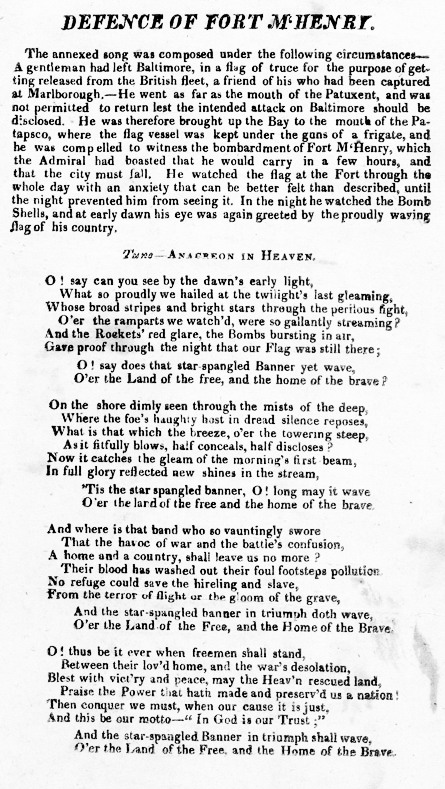
I know I'm not the first person to notice this, but our national anthem is a war song. It enshrines violence at the heart of our national symbolic representation of ourselves. Though the melody comes from an English gentleman's-club song referencing Anacreon, the greek poet of wine, women and song, the whole poem from which The Star Spangled Banner comes is phrased as a series of questions which are all answered by flag-waving.
It is the first verse that has been most often sung since the song was adopted as the US national anthem in 1931, and in that verse, the continued existence of our country is in grave doubt. The uncertainty is underlined by the form of the verse, as it contains only one statement (quoted above) framed by two questions. The only direct affirmation in the text sets up a condition: it is only the bombs going off that prove our flag is still there. The rockets' red glare tells us that our country still exists.
This is how an historical trauma becomes a performative fact about a people--every time we meet formally as Americans, we symbolically re-enact the anxious night in 1812 that Francis Scott Key spent as a temporary prisoner on an English ship. Every sporting event, every Irish Dance competition, and every school assembly begins with us reliving the battle of Baltimore and our last-ditch redemptive victory: our fragile and feisty fledgling democracy battered but yet somehow managing to hold off the mighty forces of the nasty old English Crown. At that time, everywhere we turned lay a threat to our new freedom, but as long as the bombs were bursting in air, we knew our only recently-declared independence as a country still existed. As long as we were fighting, we knew we were alive.
Well, almost 200 years of nearly continuous war later, our flag is still there, and we are still rehearsing the mindset of a righteous and threatened country defined by war victories that can only know it exists if the bombs are going off. This is how we come to mistake the mass murder of a diffuse band of religious fanatics for something the size of the hand of the old British empire: we rehearse that substitution in our song. We take that condition of threat an insecurity redeemed through victorious war and apply it to our present almost daily by singing our song. Though the actual existence of our state is threatened by no one in the world (except maybe ourselves), we still react to all threats by regressing to the reactive state our national anthem has taught us.
I just recently looked up Key's full text for the first time in my life, and I have to admit I was surprised at how current it is. In addition to establishing active war as a condition for knowledge of our continued existence as a country, the poem equates religious salvation with military victory so powerfully and so insidiously that it could have been commissioned by a contemporary political operative with a war to sell. (Did you note that in the first verse the words "Rockets," "Bombs," and "Flag" are all capitalized, the way the word "God" usually is?) The last verse of the original poem, The Defense of Fort McHenry, is particularly telling, and relevant to our current mindset. This is the verse that brings it all home and tells us what we're really about as a new nation; our "heav'n rescued land" has a responsibility to the God that saved it:
Then conquer me must, when our cause it is just
And this be our motto "In God is our trust;"
And the Star Spangled Banner in Triumph shall wave
O'er the land of the free and the home of the brave.
To triumph, one must triumph over someone, who then lives in defeat and subjugation. To live in triumph, one must be always in conflict, always defeating adversaries. Is this what we really want?
I know that national anthems are often militaristic, that nationalism frequently relies on defining ourselves against others and uses fear, religious fervor, and good old team spirit to exalt violence and war, but I thought that this kind of exaggerated nationalism had been discredited due to the bitter fruits it had borne in the world wars of the last century. Must we still practice exactly that brand of violent nationalism in our core national symbols?
I'm helping a friend of mine, the musicologist Mark Clague, who is doing a big project on the anniversary of the national anthem for 2011-2012, commissioning new interpretations of the song and engaging scholars on the subject. I know I'm ready for a semiological analysis on how a hymn extolling a merger of the virtues of Venus and Bacchus becomes a nationalisitic war song. We could certainly use a major taking-apart of the layers of encoded meanings of the text and music, in addition to the shifing meanings in performance and the song as a site of contested identity poitics that I believe Mark himself has embarked upon.
Right now, I'm feeling like it might be time to start thinking about a new anthem as well. How about an anthem without war? How about an anthem, heaven forbid, with a little humility? If we really are the leaders of the free world, how about an anthem that is a bit more self-assured and kindly, an anthem that might lead us to better behavior, a touch less national narcicism--one that speaks of the responsibilities of privilege, maybe, or perhaps says something about how beautiful our land is, like America the Beautiful? (That song would be fine with me as long as we ditch the last verse about the Pilgrim's feet trodding all over the natives). While we're at it, could we have a song that took a verse to somehow express some regret at the destruction of the Native American societies we perpetrated? Or maybe some sorrow over all the damage to the environment we've caused? I nominate This Land is Your Land as a candidate--every single verse of it.
Gave proof through the night that our Flag was still there"
I know I'm not the first person to notice this, but our national anthem is a war song. It enshrines violence at the heart of our national symbolic representation of ourselves. Though the melody comes from an English gentleman's-club song referencing Anacreon, the greek poet of wine, women and song, the whole poem from which The Star Spangled Banner comes is phrased as a series of questions which are all answered by flag-waving.
It is the first verse that has been most often sung since the song was adopted as the US national anthem in 1931, and in that verse, the continued existence of our country is in grave doubt. The uncertainty is underlined by the form of the verse, as it contains only one statement (quoted above) framed by two questions. The only direct affirmation in the text sets up a condition: it is only the bombs going off that prove our flag is still there. The rockets' red glare tells us that our country still exists.
This is how an historical trauma becomes a performative fact about a people--every time we meet formally as Americans, we symbolically re-enact the anxious night in 1812 that Francis Scott Key spent as a temporary prisoner on an English ship. Every sporting event, every Irish Dance competition, and every school assembly begins with us reliving the battle of Baltimore and our last-ditch redemptive victory: our fragile and feisty fledgling democracy battered but yet somehow managing to hold off the mighty forces of the nasty old English Crown. At that time, everywhere we turned lay a threat to our new freedom, but as long as the bombs were bursting in air, we knew our only recently-declared independence as a country still existed. As long as we were fighting, we knew we were alive.
Well, almost 200 years of nearly continuous war later, our flag is still there, and we are still rehearsing the mindset of a righteous and threatened country defined by war victories that can only know it exists if the bombs are going off. This is how we come to mistake the mass murder of a diffuse band of religious fanatics for something the size of the hand of the old British empire: we rehearse that substitution in our song. We take that condition of threat an insecurity redeemed through victorious war and apply it to our present almost daily by singing our song. Though the actual existence of our state is threatened by no one in the world (except maybe ourselves), we still react to all threats by regressing to the reactive state our national anthem has taught us.
I just recently looked up Key's full text for the first time in my life, and I have to admit I was surprised at how current it is. In addition to establishing active war as a condition for knowledge of our continued existence as a country, the poem equates religious salvation with military victory so powerfully and so insidiously that it could have been commissioned by a contemporary political operative with a war to sell. (Did you note that in the first verse the words "Rockets," "Bombs," and "Flag" are all capitalized, the way the word "God" usually is?) The last verse of the original poem, The Defense of Fort McHenry, is particularly telling, and relevant to our current mindset. This is the verse that brings it all home and tells us what we're really about as a new nation; our "heav'n rescued land" has a responsibility to the God that saved it:
Then conquer me must, when our cause it is just
And this be our motto "In God is our trust;"
And the Star Spangled Banner in Triumph shall wave
O'er the land of the free and the home of the brave.
To triumph, one must triumph over someone, who then lives in defeat and subjugation. To live in triumph, one must be always in conflict, always defeating adversaries. Is this what we really want?
I know that national anthems are often militaristic, that nationalism frequently relies on defining ourselves against others and uses fear, religious fervor, and good old team spirit to exalt violence and war, but I thought that this kind of exaggerated nationalism had been discredited due to the bitter fruits it had borne in the world wars of the last century. Must we still practice exactly that brand of violent nationalism in our core national symbols?
I'm helping a friend of mine, the musicologist Mark Clague, who is doing a big project on the anniversary of the national anthem for 2011-2012, commissioning new interpretations of the song and engaging scholars on the subject. I know I'm ready for a semiological analysis on how a hymn extolling a merger of the virtues of Venus and Bacchus becomes a nationalisitic war song. We could certainly use a major taking-apart of the layers of encoded meanings of the text and music, in addition to the shifing meanings in performance and the song as a site of contested identity poitics that I believe Mark himself has embarked upon.
Right now, I'm feeling like it might be time to start thinking about a new anthem as well. How about an anthem without war? How about an anthem, heaven forbid, with a little humility? If we really are the leaders of the free world, how about an anthem that is a bit more self-assured and kindly, an anthem that might lead us to better behavior, a touch less national narcicism--one that speaks of the responsibilities of privilege, maybe, or perhaps says something about how beautiful our land is, like America the Beautiful? (That song would be fine with me as long as we ditch the last verse about the Pilgrim's feet trodding all over the natives). While we're at it, could we have a song that took a verse to somehow express some regret at the destruction of the Native American societies we perpetrated? Or maybe some sorrow over all the damage to the environment we've caused? I nominate This Land is Your Land as a candidate--every single verse of it.
Saturday, January 16, 2010
Friday, January 15, 2010
This Land is [Not] Your Land
I woke up this morning to the news that a new nickel mine in the Upper Peninsula of Michigan has been approved, thus guaranteeing that another part of our state will become a slagheap, and that poisonous mine tailings will be leeching into the waters of the great lakes for many years to come. Moments later, I heard again that the power company, with the aid of the state legislature, is fighting hard for a new coal plant, thus guaranteeing that Michigan will continue to do its part to support blowing the tops off mountains and filling the streams with mud in Kentucky and West Virginia, helping to turn our planet into the overheated toxic bathtub it was apparently meant to be.
It made me remember some alternate verses I wrote to "This Land Is Your Land" when I was a kid:
As I have travelled across the nation,
it seems to me it's one big corporation--
it's all a resource for exploitation:
This land was made for industry.
You've got the soil rights, but I've got the oil rights,
where wolves ran barking, now it's for parking,
straight from the gas pump to the toxic waste dump:
This land was made for industry
At the time, these words were meant to be an exercise in bitter sarcasm, written as I watched them uproot the old woods next to the Mennonite church for a shopping mall. The euphemism of the time was that that stretch of road was being "improved," and I remember hoping in my ten-year-old mind that satire might have some kind of power to show what was really being done. Certainly if we opened our eyes to the ridiculousness of the whole enterprise, I thought, we could look at what we were doing and be ashamed.
I was wrong. We have no shame. Three decades later, the scale of the second phase of suburban sprawl in my town seems quite quaint, more like child's play. By now, the Mennonite church itself has been bulldozed for a drive-through beer store, and we've tipped so far into bizarro-world that even wild exaggerations meant to make a point about the excesses of the 1970's seem to be a statement of the obvious, more like an actual manifesto for unrestrained commercial development than an ironic inversion of our real values meant to prick our conscience. We've gotten used to feeling that the corporate juggernaut can't be stopped, even when all indications seem to be that the cost of that rampage is the very life of our planet. It's become the status quo.
Outrage doesn't seem to work, and satire has been rendered moot. Shall we go on living in complicty with this system, and take it as a given?
It made me remember some alternate verses I wrote to "This Land Is Your Land" when I was a kid:
As I have travelled across the nation,
it seems to me it's one big corporation--
it's all a resource for exploitation:
This land was made for industry.
You've got the soil rights, but I've got the oil rights,
where wolves ran barking, now it's for parking,
straight from the gas pump to the toxic waste dump:
This land was made for industry
At the time, these words were meant to be an exercise in bitter sarcasm, written as I watched them uproot the old woods next to the Mennonite church for a shopping mall. The euphemism of the time was that that stretch of road was being "improved," and I remember hoping in my ten-year-old mind that satire might have some kind of power to show what was really being done. Certainly if we opened our eyes to the ridiculousness of the whole enterprise, I thought, we could look at what we were doing and be ashamed.
I was wrong. We have no shame. Three decades later, the scale of the second phase of suburban sprawl in my town seems quite quaint, more like child's play. By now, the Mennonite church itself has been bulldozed for a drive-through beer store, and we've tipped so far into bizarro-world that even wild exaggerations meant to make a point about the excesses of the 1970's seem to be a statement of the obvious, more like an actual manifesto for unrestrained commercial development than an ironic inversion of our real values meant to prick our conscience. We've gotten used to feeling that the corporate juggernaut can't be stopped, even when all indications seem to be that the cost of that rampage is the very life of our planet. It's become the status quo.
Outrage doesn't seem to work, and satire has been rendered moot. Shall we go on living in complicty with this system, and take it as a given?
Monday, January 11, 2010
One Small Thing
A poem can take a very small thing and show you how it resonates through an entire world of experience. I’ve always thought music should do the same thing: to have as its goal making everything radiant, and to take the light that is focused on that one small thing in a poem, and to make it shine everywhere in our attention.
Friday, January 8, 2010
Monday, January 4, 2010
Note to America
These days, we think power comes from money. Instead of "God willing" we say "let the markets decide." But tonight, as I was walking in the cold, with Orion hanging over me in the southwest, and blue bands of cloud passing before the upturned horns of the setting crescent moon, I thought it might be good to remember that the only real power comes from the turning earth itself, and that all the miserable creations of our human-centric world mean nothing if they do not honor the great forces and energies of the natural world that move through us and all around us and that we have come to ignore amid our many constructions and distractions.
If we have to chase after something in this life, let it not be money and its false power. The good earth will still be spinning when the markets have crashed ten-thousand times...
If we have to chase after something in this life, let it not be money and its false power. The good earth will still be spinning when the markets have crashed ten-thousand times...
Wisdom of the Day
To be equal to our age, it is not sufficient for philosophy to retreat from spiritual vision to economics or become simply an apologist for technological innovation and investment in artificial intelligence. We need a human intelligence to express a culture equal to our present condition.
William Irwin Thompson
William Irwin Thompson
Saturday, January 2, 2010
Inviting the gods
After yet another night of very accomplished music that was utterly free from yearning, I find myself thinking about Bali. I was taught that in that part of Indonesia the gods are the true audience for music, not people. I learned that musical ceremonies exist to invite the gods to be present, and to call forth and satisfy the needs of invisible powers.
I go to a lot of concerts, so I listen to a lot of live music that is well-made and beautifully played, but I find that there are far more crowd-pleasers than god-pleasers. So much music seems to be made merely for the people, and I become convinced of one thing: for me, music that doesn’t somehow strive to invite a sacred presence just isn’t enough. All the technique and titillation aimed at garnering a standing ovation just seems empty without a sense of courting the sacred—it could be hilariously sacred, dark cathedral sacred, ecstatic sacred, deep-in-the-woods sacred, oddly sacred, but geeze-louise, so often it seems like not only was the music not written for the gods, but they aren’t even invited to come listen. So often it seems as if no one on stage wants anything from the music but their own mastery and our admiration.
So here is what I’m asking: what if we all agree not to waste our wild and precious lifetimes with the blank nonsense of merely desirable, semi-automatic, or even technically perfect-but-safe art? Could we musicians individually or collectively decide to reject a culture that constantly tempts us to orient our whole expression toward empty accomplishment? Could we please just pause in our busy days of achievement to call the gods forth into our homes and our concert halls, and to beseech them with every breath of our music-making?
I go to a lot of concerts, so I listen to a lot of live music that is well-made and beautifully played, but I find that there are far more crowd-pleasers than god-pleasers. So much music seems to be made merely for the people, and I become convinced of one thing: for me, music that doesn’t somehow strive to invite a sacred presence just isn’t enough. All the technique and titillation aimed at garnering a standing ovation just seems empty without a sense of courting the sacred—it could be hilariously sacred, dark cathedral sacred, ecstatic sacred, deep-in-the-woods sacred, oddly sacred, but geeze-louise, so often it seems like not only was the music not written for the gods, but they aren’t even invited to come listen. So often it seems as if no one on stage wants anything from the music but their own mastery and our admiration.
So here is what I’m asking: what if we all agree not to waste our wild and precious lifetimes with the blank nonsense of merely desirable, semi-automatic, or even technically perfect-but-safe art? Could we musicians individually or collectively decide to reject a culture that constantly tempts us to orient our whole expression toward empty accomplishment? Could we please just pause in our busy days of achievement to call the gods forth into our homes and our concert halls, and to beseech them with every breath of our music-making?
Friday, October 2, 2009
administrative gardening
I think about my work as an administrator and teacher in a University School of Music–(fostering community, building trusting relationships, continuing ideals)–as something akin to an organic gardener or farmer's relationship to the land. The short-term gains to be had from treating the land or the institution as a set of resources from which to draw personal gain (the equivalent of jacking the whole operation up on chemical fertilizers) are outweighed by the long-term costs of such exploitative extraction. Instead of taking everything we can get from the soil of our institution(s), we need to work to enrich the land, build up the layers of fertile topsoil with care, attention, kindness, generosity, and attention. With love and commitment, even. I'm not sure about a metaphor that matches hard caring work in a University with compost, but there it is. Stewardship and selflessness enrich community and continue institutions. Selfishness, elitism, hierarchy, prestige-mongering, and grandstanding destroy them.
Subscribe to:
Posts (Atom)